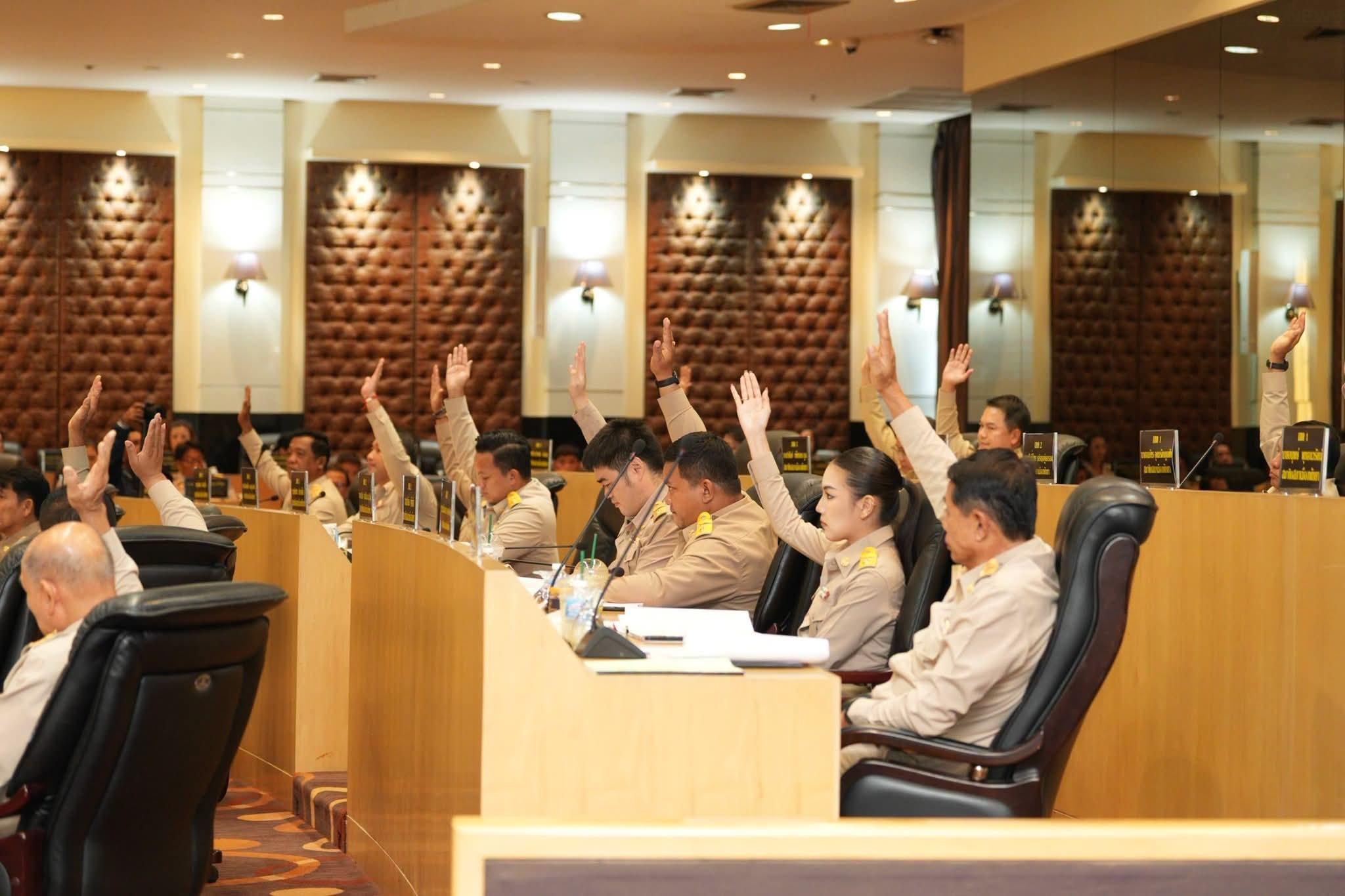



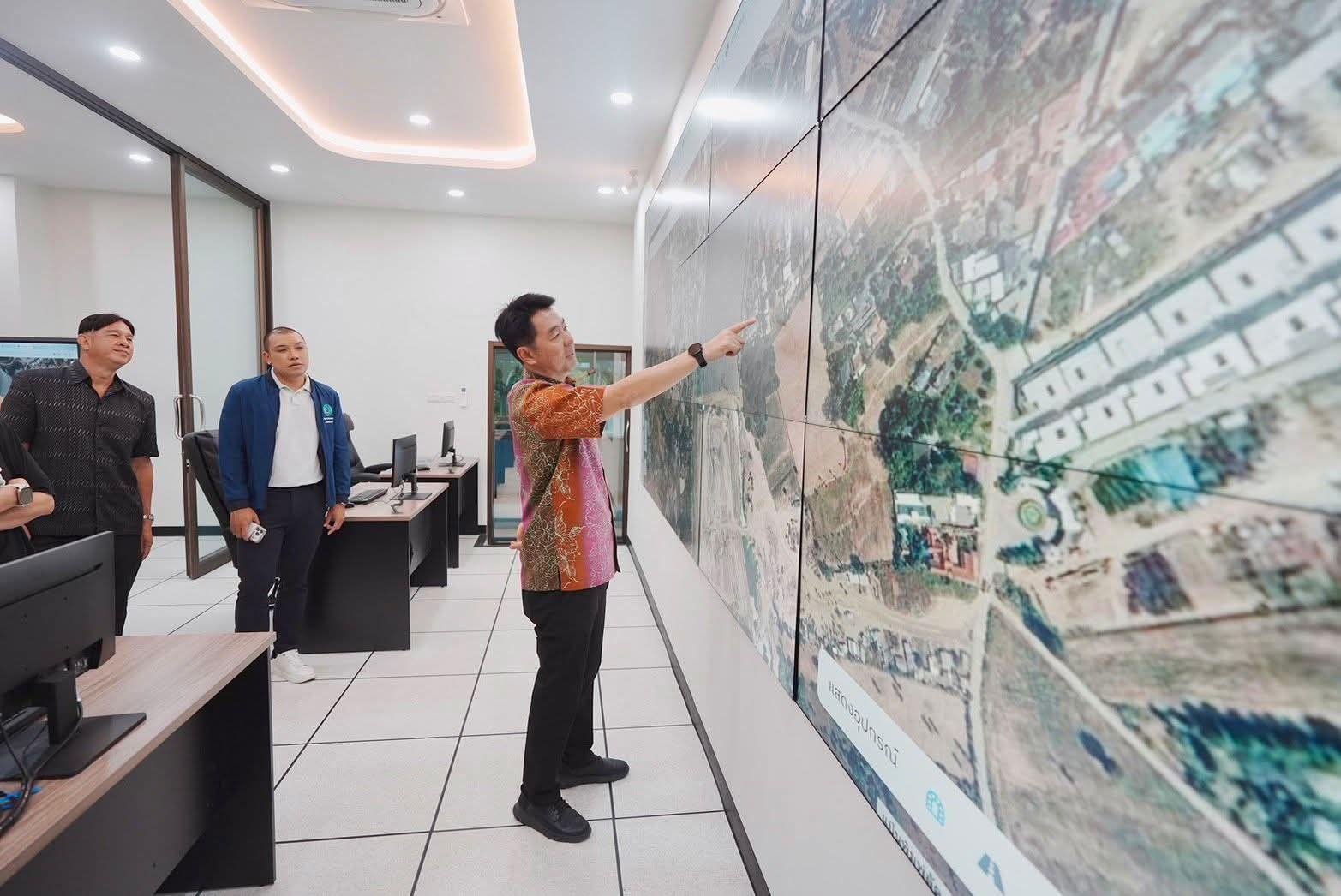
Pattaya, May 18th, 2026– Pattaya City Mayor Poramese Ngamphichet visited the War Room at the Sanitation Bureau’s Nong Yai Wastewater Treatment Plant on May 18th to monitor the advancement of the city’s Intelligent Water Management System. This marks a major step forward in preventing and mitigating flooding through the use of AI technology and real-time sensors.
Accompanied by Sakchai Charoenyukongrod, Assistant Secretary to the Mayor, and Bancha Kullawanit, Secretary to the President of the Pattaya City Council, the mayor received a briefing from Nattapong Saentawisuk, Director of the Flood Prevention and Drainage Division acting as Director of the Sanitation Bureau, along with relevant officials.

The smart water management system is designed to monitor and respond to flooding threats in real time. It features sensors and cameras installed both inside drainage pipes and on road surfaces to measure water levels, volume, and flow rates via Flow Meters. This allows precise tracking of water flowing from the eastern areas into the city.
Pattaya has also integrated data with the Chonburi Provincial Administration Organisation through the “Fa Fon Sense” weather forecasting system and “Fa Fon River” water level monitoring system. Weather stations and water monitoring points have been established across Pattaya, Nong Prue, Huai Yai, and eastern zones to improve rainfall prediction, flood surveillance, and real-time air quality tracking.

Installation of the system is now complete, with final configuration underway. Phase 1 is expected to become fully operational by the end of July 2026.
Mayor Poramese stated that the project is a group effort between Pattaya City’s Sanitation Bureau and the Chonburi Provincial Administration Organisation. It is to upgrade flood management and public warning capabilities during heavy rainfall.

“The system will display a water management map and use cameras and sensors in pipes and on roads to calculate water flow, which mainly moves from the eastern side into the city center before draining into the sea on the western side,” the mayor explained.
Once Phase 1 is completed by late July 2026, the system will enable real-time flood monitoring and immediate public alerts. Automatic display screens and warning signs will be installed at three recurring flood-prone locations: the railway road near Khao Ta Lo, South Pattaya Sukhumvit Road, and the Pattaya 3 Road – Mum Aroi intersection.
This will replace the current practice of manually closing roads with traffic officers, shifting instead to an automated system that can also precisely control drainage gates, reducing human error.
Future plans include linking the alert system to the “Pattaya Connect” application and SMS notifications, using color-coded risk levels: green for normal conditions, orange for monitoring, and red for strict “do not enter” warnings. This will allow residents and visitors to easily track flood and traffic conditions.
In Phase 1, 43 sensors will be installed inside drainage pipes and 15 on road surfaces, with operations beginning around July. Phase 2 will add another 50 pipe sensors and more road monitoring stations, expected to be completed by the end of 2026.

Once fully implemented, the system will utilize Big Data to analyze rainfall volume, pipe water levels, and road surface conditions, predicting exactly how many minutes until water reaches risk areas. This shared real-time data platform will enable faster coordination among the Sanitation Bureau, traffic enforcement units, and support teams, eliminating the need to wait for public reports or on-site inspections.
Mayor Poramese also mentioned a major future project, already approved by the Cabinet with a budget of nearly 3 billion baht. The Department of Public Works will handle procurement, with Pattaya contributing 10% of the funding. The project involves installing large drainage pipes (approximately 3.6 meters in diameter and 6 meters deep) in a crab-claw formation, with one arm along Khao Ta Lo Road and another along Sukhumvit 69 Road. The main pipe will run under South Pattaya Road and connect to the South Pattaya Canal.
The system is expected to handle heavy rainfall up to 130 mm per hour. Currently, rainfall of 60-70 mm takes about two hours to drain. Once Phase 2 of the railway road project is completed in 2027, flood conditions are anticipated to improve further. The large-scale project is expected to take 3-4 years to complete, providing Pattaya with a long-term, highly efficient flood drainage system.
**News: Miss Khwanjai Suetrong**
**Photos: Mr. Somprasong Phochonphan**
**Public Relations Division, Tourism and Sports Bureau**